- Case Studied
- Posts
- Vol. 120 McDonald's: The viral bite 🍔
Vol. 120 McDonald's: The viral bite 🍔
How McDonald's CEO video sparked a flurry of social media reactions + sales

Case Studied
March 24, 2026

Today’s Case Studied is sponsored by Adelaide Metrics.
Helping marketers measure true media quality and drive better results with AU, the omnichannel attention metric available in every major DSP and SSP.
Case Studied
Victory, flop, or both?
In the modern attention economy, the line between a PR fumble and a valuable marketing moment can be surprisingly thin. Recently, we saw McDonald’s toe that line with a viral video of their CEO taste testing a new “product.”
This week, Case Studied explores how McDonald's CEO sparked a flurry of social media reactions and drove sales in the process.
The Brief
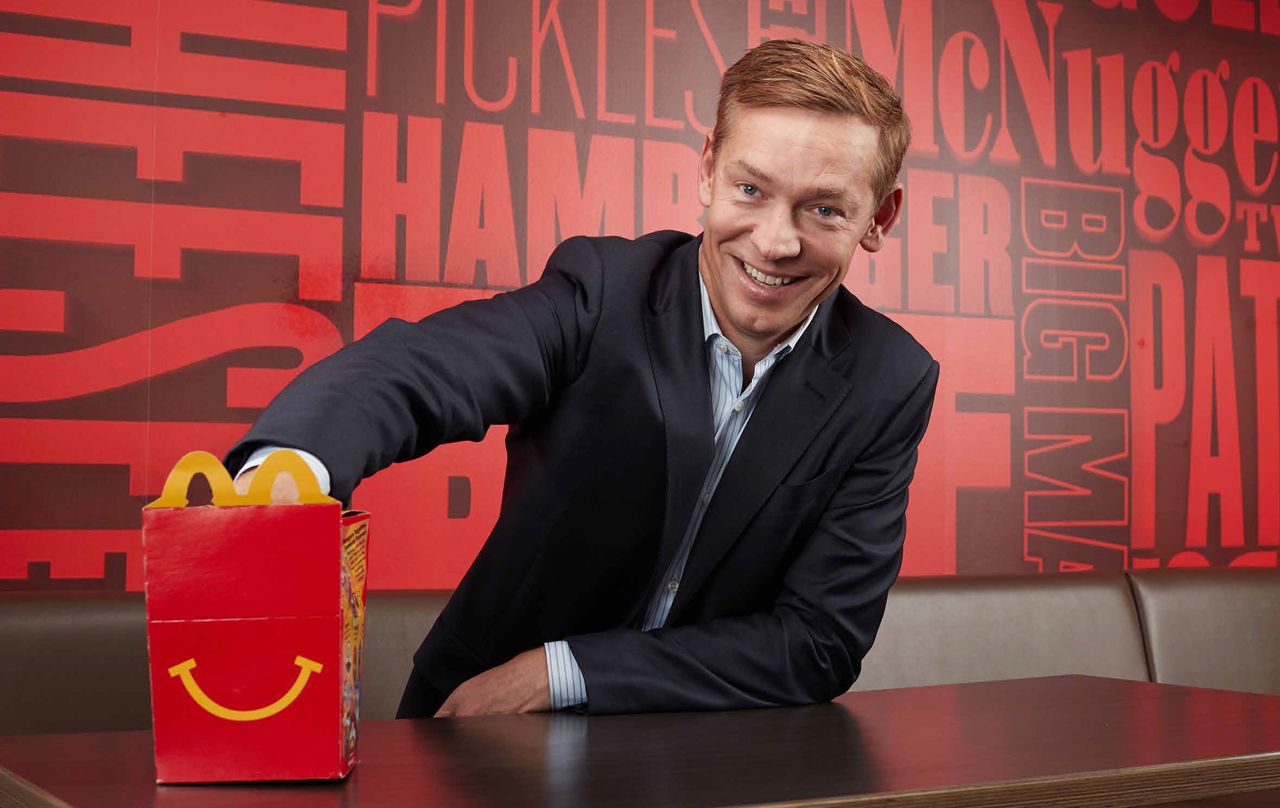
McDonald's is no stranger to the spotlight. The world's largest fast food chain, with $26.89 billion in annual revenue in 2025, spent decades building one of the most recognizable brands on the planet. But even for a brand of that size, breaking through the noise in today's fragmented media landscape is a real challenge.
McDonald’s CEO Chris Kempczinski has been an active social media presence since at least 2020, regularly posting career advice, leadership lessons, and product content on LinkedIn and Instagram. He’s often filmed in his office on what appears to be an iPhone.
By early 2026, Kempczinski grew his LinkedIn following to over 168,000 and even won a Shorty Award in 2025 for his authentic approach to executive communications on LinkedIn.
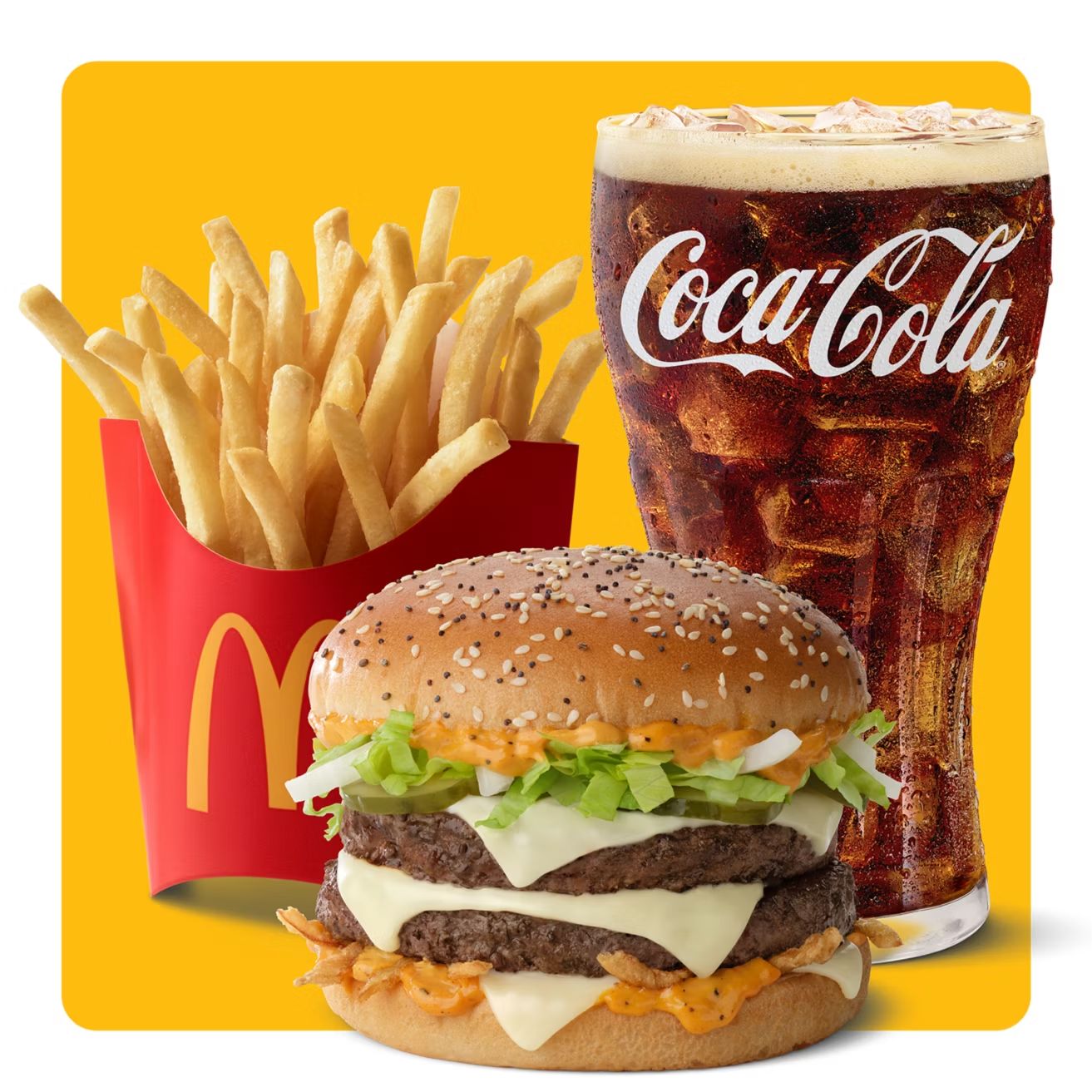
In the beginning of February, McDonald’s was gearing up to launch the new Big Arch, the brand’s biggest new U.S. burger launch in years. Kempczinski used his personal social media account to support the launch, spread awareness, and drive sales. In theory, this approach pulled from the same playbook McDonald’s and its CEO have been using for years now. But in execution, the output stood out quite a bit.
Most paid media campaigns optimize for cost and reach. But those metrics don’t reveal which placements actually drive outcomes. Explore how attention metrics and media quality signals can help marketers identify high-impact environments—and how to invest in media that's actually worth it.
The Execution
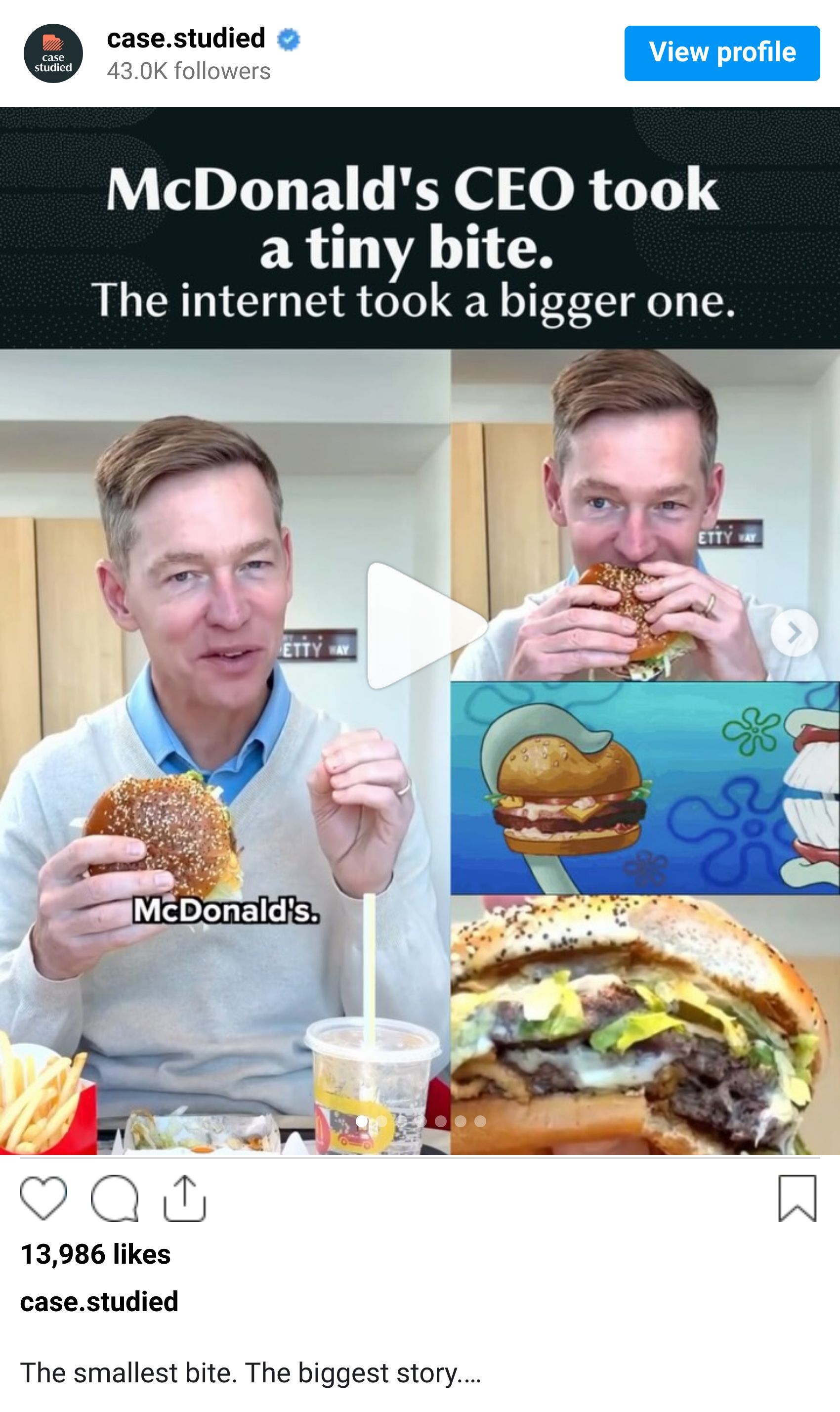
To support the launch, Kempczinski posted a video to his LinkedIn account promoting the Big Arch. There was no agency behind it. It simply showed the CEO sitting at a break room-style table, unwrapping the burger, describing its ingredients, and taking what he called "a big bite for a Big Arch."

However, viewers were quick to point out that the bite in question was, by most accounts, decidedly not big.
The video sat quietly on LinkedIn for several weeks before creators on X and TikTok discovered it and stitched their reactions. Comedian Garron Noone's TikTok reaction video alone—during which he states, “This man does not eat McDonald’s”—racked up over 10 million views.
From there, the reaction videos and satirical posts came in droves. The phrase "I love this product" became a punchline for corporate detachment.
Rival brands moved fast with reactions as well. Burger King posted a video of its CEO, Tom Curtis, taking a noticeably larger bite of a Whopper, captioned "Thought we'd replay this."
Wendy's U.S. president Pete Suerken appeared in his own taste test video, with the brand stating, "This is what it looks like when you don't have to pretend to like your 'product.'"
Jack in the Box had its mascot in a video captioned, "Small bites? We don't do that here." Costco posted a video of its CEO eating one of its famous $1.50 hot dogs. A&W posted a satirical video mimicking the awkward moments in Kempczinski’s video before inviting him to lunch at the Canadian chain.
As for McDonald’s? The brand's official Instagram account posted a photo of the Big Arch with the caption, "Take a bite of our new product," a winking nod to the mockery. It then added the comment, "Can't believe this got approved." It was a small move, but the self-awareness showed McDonald's was in on the joke.
The Big Arch officially launched nationally on March 4, 2026.
The Results

According to Axios, McDonald's saw 47,900 total mentions and a reach of 5.8 billion across all platforms, marking the single-highest conversation day for any campaign. PeakMetrics data shows the viral video was mentioned over 50,000 times on X alone since its original post.
PeakMetrics also revealed that Burger King appeared in 68% of the McDonald's burger video conversation online, while Wendy's appeared in 18%.
Kempczinski's Instagram following grew 30% following the video and the Big Arch post itself has accumulated nearly 11 million views on Instagram. His total follower count now stands at 7x that of his nearest industry CEO competitor, Starbucks' Brian Niccol.
As for business impact, a McDonald's spokesperson confirmed that early Big Arch sales were beating expectations. "We're glad the Big Arch has everyone's attention," they said.
The Takeaways
1) Self-awareness can be a brand’s best friend.
When the internet starts laughing at your brand, the instinct is often to go quiet or get defensive. McDonald's did neither. By posting "Take a bite of our new product" with a self-deprecating caption, the brand signaled that it was in on the joke. It didn’t stop the reactions and nobody lauded the brand for its response. But the self-awareness did show that the brand was rolling with the punches with a shrug and a chuckle.
If your brand finds itself on the not-so-flattering end of a viral moment, resist the urge to defend or apologize your way out of it. Lean into what's actually funny or relatable about the situation, respond quickly, and keep it light. Audiences are often far more forgiving of brands that can laugh at themselves than those that can't.
2) Virality doesn't have to be flattering to be valuable.
Much of the conversation around Kempczinski's video was mocking. Comments called him out of touch, competitors piled on, and the memes weren't exactly kind. By most traditional PR standards, that's a bad outcome. But sales beat expectations, Instagram views hit nearly 11 million, and McDonald's had its highest single-day conversation volume on record.
Consider how you measure the success of a moment. The burger bite video shows clear proof that reach and awareness can have value even when the sentiment is mixed. The assumption is usually critique means a net-negative and flattery means a net-positive. But clearly, there’s a wide-reaching gray area between those two.
3) Your CEO is a brand asset.
Nearly every brand that responded to Kempczinski’s video did so through their CEO. In each case, putting a leader on camera demonstrated confidence and a willingness to show up in the moment. Plus, when folks see company leaders show up, they tend to pay attention.
Research from Weber Shandwick found that 81% of executives believe a visible public CEO profile is essential to a company's reputation. It may be worth thinking about the public persona of your company's CEO. Kempczinski's massive social media following shows that when leaders find a format and cadence that works for them, the ROI on that investment can have a wide-ranging ripple effect.
End the search: Vendry makes it simple to find your next agency partner. Share your needs and get connected with vetted, top-tier options in under a week—at no cost to you.