- Case Studied
- Posts
- Vol. 119 Nutter Butter: Intentionally unhinged 🥜
Vol. 119 Nutter Butter: Intentionally unhinged 🥜
How Nutter Butter drove a 190% sales bump with absurdist TikTok content

Case Studied
March 10, 2026
Today’s Case Studied is sponsored by pb+j.
We work with CMOs at $20M+ multi-channel brands to finally figure out what’s holding their DTC growth back… before someone suggests (yet another) status meeting.
Case Studied
Weird works
Shock value in marketing is nothing new. But there's a difference between a brand doing something provocative to get attention and a brand making bizarre shenanigans part of their ethos.
Liquid Death built a $1.4 billion valuation, in part, by using this approach. For them, that meant partnering with an adult film star and doing a real taze test with their internet haters, among other stunts. For Nutter Butter, that meant going all-in on making strangeness part of their brand strategy.
This week, Case Studied explores how Nutter Butter drove a 190% sales bump with absurdist TikTok content.
The Brief
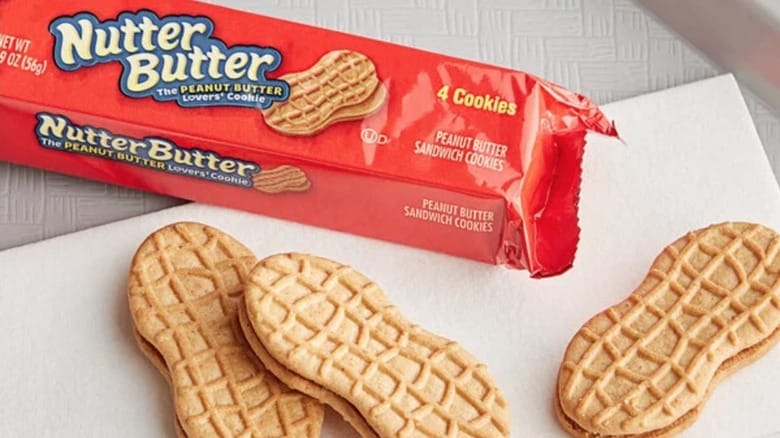
Nutter Butter is a peanut butter sandwich cookie brand owned by Nabisco, a subsidiary of Mondelēz International. The cookie has been on shelves since 1969. But despite its decades-long history, Nutter Butter’s cultural footprint remained thin compared to stablemates like Oreo.
The brand didn’t have a strong visual identity, a memorable tagline, or a passionate fanbase. As author and professor Mark Schaefer put it: "When you think of the Nutter Butter cookie, what IS the brand? That's what I thought. Nothing comes to mind."
For most brands, that kind of anonymity would be a problem to solve. Nutter Butter, in contrast, used it as a starting point.
With little existing brand equity to protect or contradict, the brand had room to experiment in ways that an incumbent player simply couldn't. Nutter Butter had the opposite problem and the opposite opportunity as their more established competitors.
In early 2023, Nutter Butter started taking advantage of this by posting content on TikTok that was hard to categorize: horror-adjacent visuals, abstract imagery, and an unsettling, dreamlike tone that had virtually nothing to do with cookies. And it’s safe to say the videos are a far cry from any brand assets that you’d find in a deck.
Built exclusively for CMOs & VPs at $20M+ multi-channel brands, who have a stalled $3M-$9M DTC eComm channel. A 2-week deep dive that maps where revenue is stuck, scores your channel’s strategic health, and gives you a clear roadmap for what to fix first.
No guessing. No "let's try a few things." Just clarity. Guaranteed.
The Execution
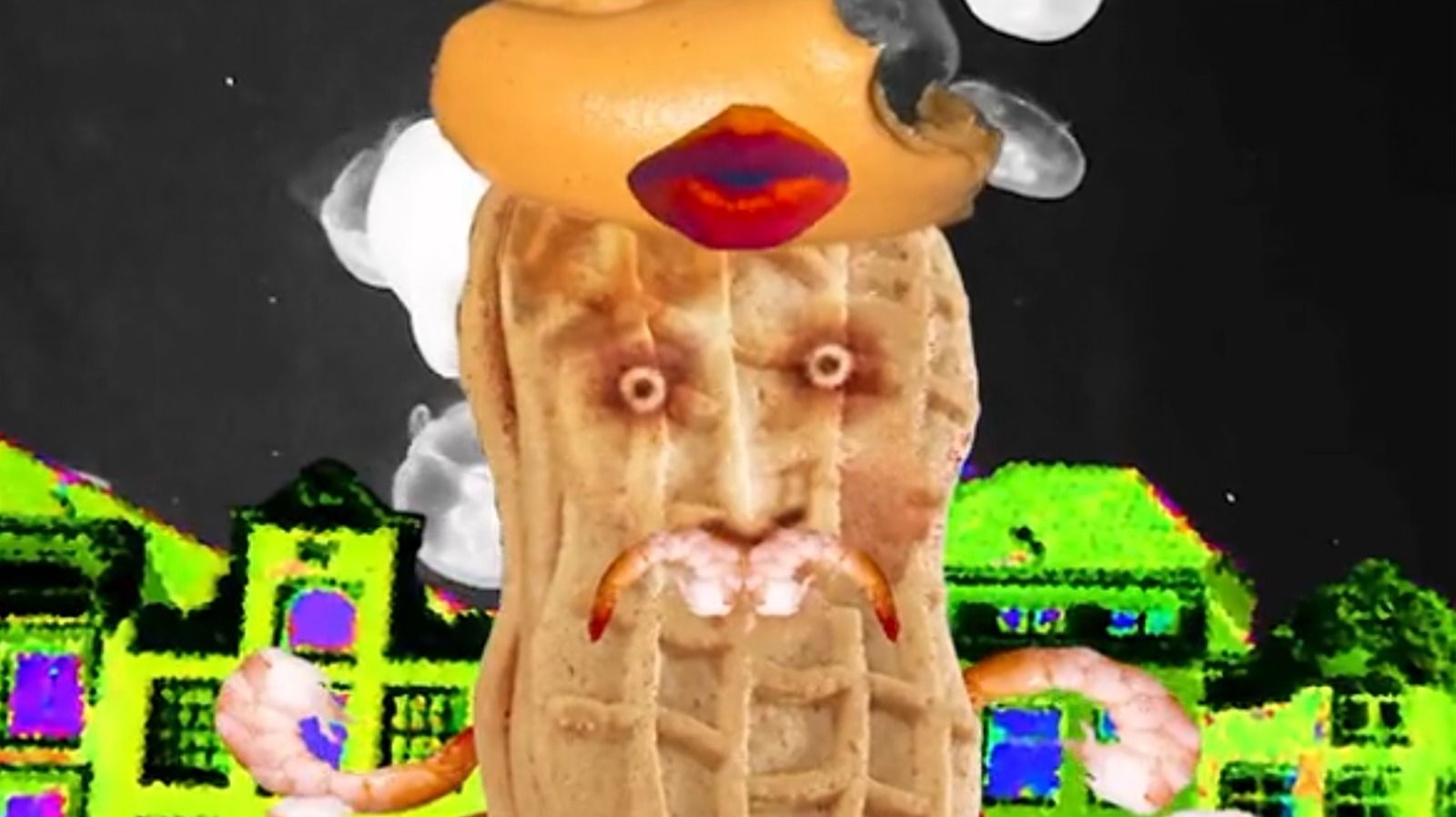
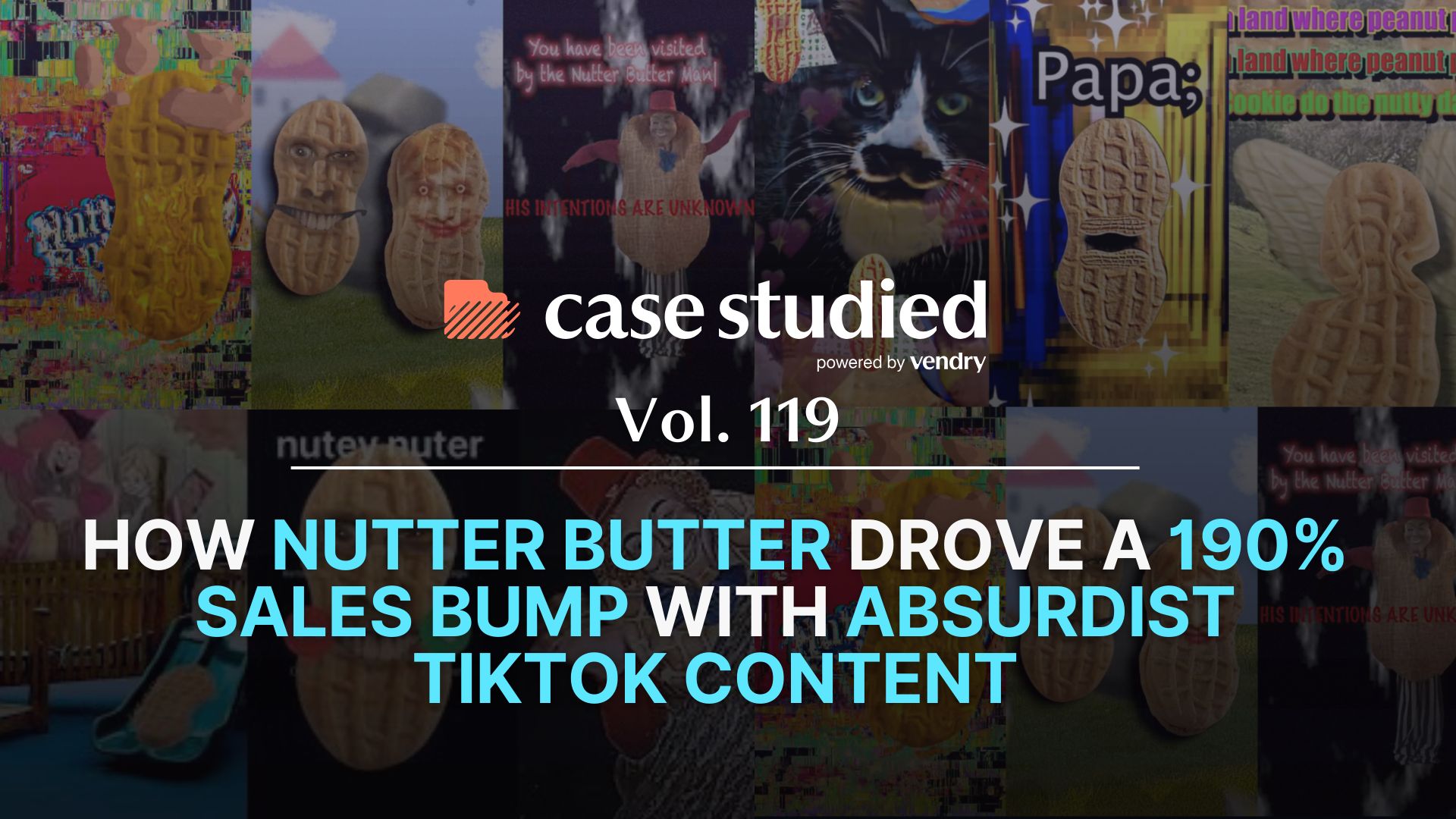
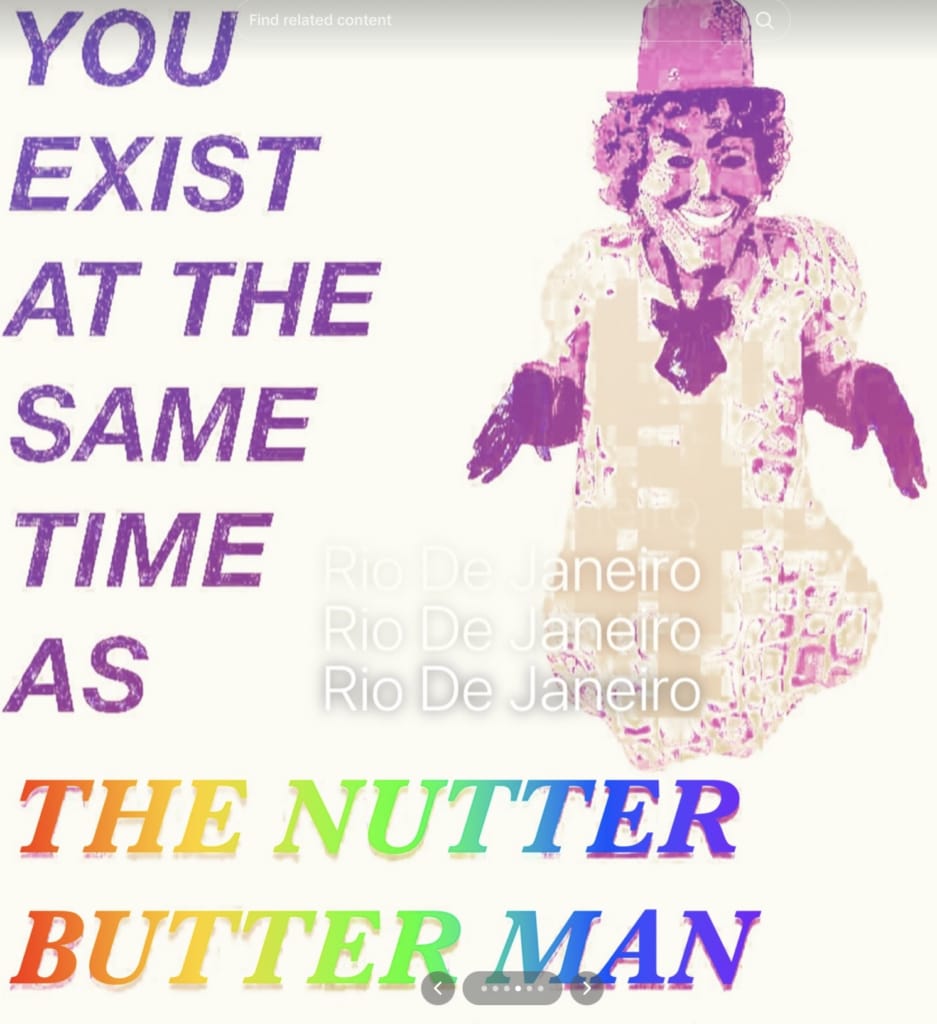
Nutter Butter's TikTok revamp was an in-house social media campaign. The content itself is surreal and lo-fi, using fever dream imagery, horror movie references, and distorted visuals of the Nutter Butter Man mascot. All of it deliberately subverts expectations of what a snack brand's social presence typically looks like.
The formula borrows from what Wharton marketing professor Jonah Berger identified as a key driver of virality: high-arousal emotions. Where most food brands chase warmth and appetite appeal, Nutter Butter leaned into fear, awe, and excitement. And according to Berger’s research, content that evokes high-arousal emotions is more likely to be recalled and discussed, regardless of whether the emotions are positive or negative.
Outside the content itself, Nutter Butter was strategic about the channels it used for promotion. TikTok's predominant audience is Gen Z, a generation with a well-documented affinity for absurdist humor and brands that don't take themselves too seriously.
@officialnutterbutter come play,
Research from Live Nation showed 82% of Gen Z believe "weird is in," and 58% say the more absurd something is, the cooler it becomes. For a 57-year-old cookie brand that didn’t have much of a foothold among younger consumers, leaning into that preference was a way to build brand affinity and loyalty with the next generation of consumers.
The content, with its recurring characters, visual codes, and cryptic themes, gave Gen Z something to interpret and engage with. In doing so, it started building a subcultural brand identity that traditional advertising rarely achieves with that audience. Organic influencer commentary and reaction content discussing the ads flooded TikTok, often eclipsing the brand's own posts in reach. One such video earned 3 million views on its own.
The Results
According to Stackline data, shoppers purchased more than 5,000 Nutter Butter products on Amazon during the first week of June 2024—a 190% increase compared to the first week of January 2024. That growth spike began in May and has not reversed at the time of this writing.
It’s important to note that around the same time this TikTok content was gaining traction, Nutter Butter dropped its prices on Amazon below the cookie category average. This pricing shift occurred in tandem with the sales spike, suggesting the viral content may have driven discovery while competitive pricing converted that interest into purchases.
On TikTok, Nutter Butter added one million new followers. Individual videos have accumulated thousands of comments and shares, while mainstream media outlets like The Today Show and Fast Company picked up the story. Google Trends data showed a marked spike in search interest for Nutter Butter during the same period.
The Takeaways
1) The absence of brand equity can be creative permission.
Nutter Butter had almost no meaningful brand recognition before this campaign, something that would typically concern a marketing team. But it treated that blank slate as creative freedom and took risks its competitors couldn’t. Given their position, there's a clear (and literal) method to the madness.
Before dismissing a bold creative direction as "off-brand," ask whether your brand has the equity that requires staunch protecting. If you're operating in a low-awareness category or carrying a brand that consumers don't feel strongly about, unconventional creative may carry less risk than it appears (and far more upside). Challenger brands in particular are often better positioned to take big swings than category leaders who have more to lose.
2) Understand the emotional mechanics of virality.
Nutter Butter's content went viral for being unsettling, strange, and impossible to look away from. It deliberately engineered strong emotional reactions, which many folks would consider negative. But with that approach, the brand kept its audience on their toes, anxiously and excitedly waiting to see what’s next.
When evaluating creative concepts for social, consider what emotional response it’s designed to provoke and how high the arousal level is. Content that generates a strong reaction, even a negative one, elicits stronger recall and discussion than emotionally neutral content. Even if virality isn’t your goal, it’s worth thinking about what emotions your brand is open to exploring.
3) Viral reach alone doesn't close the sale.
The 190% sales increase Nutter Butter saw wasn't driven solely by TikTok views. Stackline's data makes clear that a simultaneous price reduction below the category average was a significant factor. The TikTok campaign likely expanded the top of funnel, driving awareness and curiosity, while competitive pricing converted that attention into purchases.
Make sure your price, product, and purchase experience align with the goals you’re looking to achieve on the marketing side. The Nutter Butter case is a useful reminder that brands can get the most out of strategic marketing campaigns when the fundamentals of pricing and product are equally as calculated.
End the search: Vendry makes it simple to find your next agency partner. Share your needs and get connected with vetted, top-tier options in under a week—at no cost to you.